The Recovery Step: Why the Point Continues After Your Shot
The tennis recovery step helps you answer the next ball sooner: learn where to move after each shot and how to fix common positioning errors.
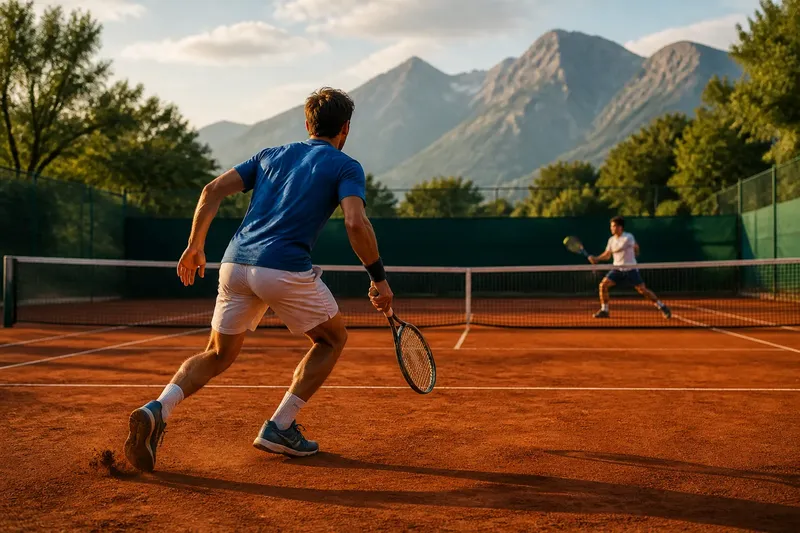
Your forehand lands deep, but you stay near the sideline admiring it; the reply comes back cross-court and you are already late. The tennis recovery step is the movement back towards a useful court position after you hit, so you can respond to the opponent’s next shot instead of watching your last one.
Recovery does not mean running to the exact centre after every ball. It means reading the shot you have played, judging the likely reply and moving to a position that gives you a workable route to the next ball. If that movement feels awkward, diagnose the specific problem rather than simply telling yourself to “get back faster”.
Why do I stop moving after I hit?
Players often treat the stroke as the end of their job. They watch the ball, assess whether it landed in, then start moving only after the opponent has struck. That pause gives the other player time to choose a reply while you are still stationary.
Make recovery part of the shot itself. As you finish your swing, let your eyes follow the ball briefly, then shift your attention to the opponent’s position and prepare your feet. You do not need to sprint before the reply is clear; you do need to be ready to move.
Try: In a cooperative rally, say “hit, recover” quietly to yourself after each groundstroke. The cue is not a command to reach the centre. It is a reminder to finish the stroke balanced and begin adjusting before the next shot.
Why do I run back to the exact centre?
The centre mark looks like a natural destination, but the most useful recovery point depends on where you hit from and what your shot allows the opponent to do. A ball sent wide may pull the opponent off court, making a position slightly towards that side sensible. A short ball may leave you needing to move forwards rather than retreat towards the baseline.
Think of your position as a movable starting point, like shifting a chair so you can reach what you need. If your shot forces the opponent wide, cover the likely open space without abandoning the opposite side. If your shot is short or central and gives the opponent options, recover more cautiously and stay ready to defend either direction.
Try: After each shot, ask yourself, “Where can my opponent hit from here, and which reply is most available?” Use the answer to adjust a few steps, rather than following a fixed route to a painted mark.
Why do I recover too far or too little?
Moving too far towards one side can expose the other; staying too close to the sideline can leave a broad court open. The opposite error is to retreat so far that a shorter reply forces a rushed forward sprint. Both often come from choosing a destination before considering the opponent’s contact point.
Use the opponent’s position and balance as clues. If they are stretched near a sideline, a controlled move towards the open court may help, but keep enough space to change direction. If they are set comfortably behind the ball, expect that they may have more choices and recover towards a balanced position rather than guessing at one corner.
Try: Recover in small adjustments, then split-step as the opponent begins the forward swing. The split-step is a light, balanced hop that helps you push in either direction; it should not become a large jump that leaves you landing as the ball travels past.
What if my own shot leaves me exposed?
Not every ball gives you time to return to an ideal position. A hurried shot, a wide contact point or a defensive reply may leave the opponent with an attacking option. In that situation, trying to reclaim the centre at full speed can make you unstable and still fail to cover the likely target.
First regain balance, then choose the most urgent space to protect. If you are pulled wide and hit a defensive ball, recover towards the court while keeping the opponent in view; do not turn your back and run blindly. If you have played a short ball, be ready for the opponent to move forwards, and avoid drifting backwards as if the rally were still a baseline exchange.
Imagine you are pulled well outside the singles sideline and send back a high, defensive cross-court ball. As the opponent moves towards it, you take controlled steps back towards the court and prepare for a possible deep reply; the observable aim is to arrive balanced enough to make a first move, not to reach a perfect spot before the opponent hits.
How can I tell whether my recovery is working?
Judge it by your readiness at the opponent’s contact, not by whether you have reached the centre. If you are balanced, facing the play and able to push either way, your recovery has given you options. If you are still crossing your feet, looking over your shoulder or braking as the ball is struck, adjust the timing or distance.
Practise with a partner who feeds comfortably rather than trying to add speed immediately. Rally cross-court, and after each shot notice whether you can split-step as your partner contacts the ball. Then vary the direction of the feed so you learn to adjust your recovery point instead of repeating one route.
- Late first move: Start your recovery as the stroke finishes, not after the opponent’s ball has crossed the net.
- Rushing to the centre: Use the opponent’s position and your shot’s depth to choose a more useful starting point.
- Overcommitting sideways: Keep room to change direction and avoid standing on the sideline.
- Running without balance: Use controlled steps, then split-step as the opponent swings.
- Watching the ball too long: Track its flight, then shift attention to the opponent’s contact and body position.
Which recovery questions should I ask?
Should I recover after every shot?
Yes, but recovery may mean only a small adjustment. If you are already in a useful position, stay balanced and prepare to move rather than running for its own sake.
Should I always return to the middle?
No. The middle is a reference point, not a compulsory destination. Your position should reflect where you hit from and the replies your opponent can realistically play.
When should I split-step?
Time the split-step so you land as the opponent makes contact, giving you a chance to push towards the ball. If you hop too early, you may be grounded before the direction is clear.
What should I do after a weak or defensive shot?
Recover as much as the situation allows while protecting the most dangerous open space. Prioritise balance and a quick first move over forcing yourself to a central spot.
What should I change in my next rally?
Choose one cue for the next rally: “finish balanced”, “adjust to the opponent”, or “land on contact”. Keep the rest simple. Trying to monitor every step, court position and tactical possibility at once can make movement stiff.
The tennis recovery step is a decision as much as a run. After your next shot, notice where the opponent can contact the ball, make a sensible adjustment, and arrive ready to move again. The point continues until you are prepared for the reply.